This article is general information, not medical advice. Talk with a licensed clinician before making any decision about your care.
Fall prevention at home after 65: what the CDC and AGS advise in 2026
If you’re over 65, a fall is not a freak accident — it’s the single most common way older Americans end up in the emergency room. About one in four adults 65 and older falls each year, and the CDC counts more than 3 million emergency-department visits and roughly 43,000 deaths from falls in a recent year. Most of those falls happen at home, and a large share are preventable. This is what the research says actually works.
Why do falls matter so much after 65?
The numbers have been moving in the wrong direction. According to the CDC, the age-adjusted fall death rate among older adults rose 21% between 2018 and 2024, and the total health care cost of nonfatal falls now runs about $80 billion a year. More than 95% of hip fractures trace back to a fall.
Here’s the part that gets less attention. A fall doesn’t have to break a bone to change your life. Many older adults who fall — even without serious injury — become afraid of falling again, and that fear leads them to move less, which weakens the muscles and balance that would have protected them. It’s a loop, and breaking it early is far easier than climbing out later.
So the goal isn’t to wrap your home in bubble wrap or stop doing what you love. It’s to remove the handful of hazards that cause the most damage, and to keep your body strong enough to catch itself.
Which home fixes make the biggest difference?
Most falls at home cluster in a few predictable spots: the bathroom, the stairs, and any floor with a loose rug or poor lighting. The National Institute on Aging flags these same trouble zones, and the fixes are neither expensive nor complicated.
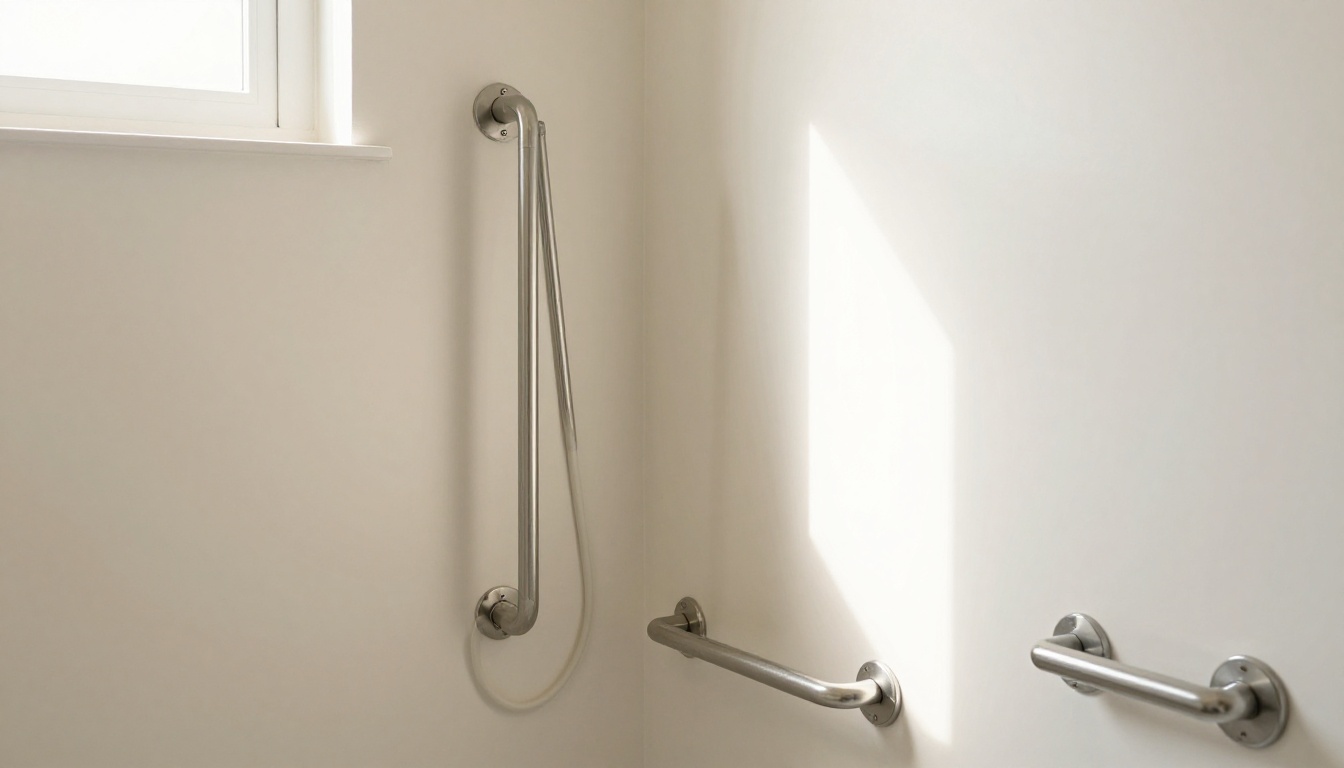
Start in the bathroom, because wet tile and the act of lowering yourself onto a toilet or into a tub are a bad combination. Install grab bars — properly anchored into wall studs, not the suction-cup kind — next to the toilet and inside and beside the tub or shower. Add a nonslip mat or adhesive strips to any surface that gets wet. A raised toilet seat and a shower chair help if standing and pivoting have gotten harder.
The stairs are the other big one. You want a sturdy handrail on both sides, not just one, and a light switch at both the top and the bottom so you’re never feeling your way in the dark. Carpet on the steps should be firmly tacked down; if it’s loose or torn, fix it or replace it with nonslip treads. Then walk the rest of the house looking for the quiet hazards — throw rugs that slide, electrical cords crossing walkways, clutter on the floor, and dim hallways. Loose rugs and low light cause a startling number of falls precisely because they’re so easy to ignore.
Does exercise really prevent falls?
Yes — and it’s the one intervention with the strongest evidence behind it. In 2024, the U.S. Preventive Services Task Force gave exercise a Grade B recommendation for older adults at increased risk of falling, concluding it provides a “moderate net benefit.” That’s a strong endorsement in a field where most things earn a shrug.
What kind of exercise? Programs that build strength and, above all, balance. Tai chi, standing on one foot while you brush your teeth, heel-to-toe walking, sit-to-stand repetitions from a kitchen chair — these train the exact reflexes that keep you upright when you catch a toe on the rug. Many communities offer evidence-based classes like Tai Chi for Arthritis or A Matter of Balance, often free through a local senior center or Area Agency on Aging.
One note on a popular myth. For years, vitamin D was pitched as a fall-prevention pill. Recent USPSTF review concluded that vitamin D, with or without calcium, does not prevent falls or fractures in most community-dwelling older adults — so if you’re taking it hoping to stay steady on your feet, talk to your doctor about whether it’s still doing anything for you. (Vitamin D may still matter for other reasons; this is specifically about falls.)
What about your medications?
This is the piece people skip, and it may be the most important one. A number of common prescriptions quietly raise your fall risk by affecting balance, blood pressure, or alertness. The American Geriatrics Society’s 2023 Beers Criteria — the standard reference for medications that deserve extra caution in people 65 and older — flags several classes for exactly this reason.
The usual suspects are sedatives and sleep aids (benzodiazepines like lorazepam, and “Z-drugs” like zolpidem), certain antidepressants, antipsychotics, and some blood pressure medications that can leave you lightheaded when you stand. None of these should be stopped on your own — some are dangerous to quit abruptly. Instead, bring your full medication list, including over-the-counter and supplements, to your doctor or pharmacist and ask directly: “Is anything here raising my chance of falling?”
The stakes are higher if you take a blood thinner, since a fall that would otherwise leave a bruise can cause serious internal bleeding. If you’re on an anticoagulant for an irregular heartbeat — a common reason after 65 — fall prevention and medication safety work hand in hand, a point worth reviewing alongside your afib and anticoagulant treatment plan.
Will Medicare pay for any of this?
Mostly, no — and it surprises people. Original Medicare treats grab bars, shower chairs, and raised toilet seats as convenience items rather than durable medical equipment, so it generally won’t cover them, according to AARP. It also won’t pay for structural changes like ramps or a walk-in tub.
There’s one real exception worth checking. A growing number of Medicare Advantage plans now offer home-safety or supplemental benefits that cover bathroom safety devices — roughly one in ten standard Advantage plans in recent years, and more among special-needs plans. Coverage varies widely, so read your plan’s Evidence of Coverage or call the number on your card before you buy anything. If you’re weighing plans during open enrollment, this is one more line item to compare, as we cover in our look at Medicare Advantage versus Original Medicare. Beyond insurance, many states and local Area Agencies on Aging run home-modification programs, and some offer no-cost safety assessments.
What to remember
Three things carry most of the weight here. First, fix the physical hazards that cause the worst injuries — grab bars in the bathroom, handrails on both sides of the stairs, good lighting, and no loose rugs. Second, keep moving; balance and strength exercise is the best-supported prevention there is, while the old vitamin D advice hasn’t held up. Third, ask your doctor or pharmacist to review your medications, because the fix might be as simple as adjusting a prescription. This article is general information, not medical advice — your own doctor knows your history and can tailor these steps to you.
Sources
- CDC. “Older Adult Falls Data.” 2025. https://www.cdc.gov/falls/data-research/index.html
- National Institute on Aging. “Preventing Falls at Home: Room by Room.” 2022. https://www.nia.nih.gov/health/falls-and-falls-prevention/preventing-falls-home-room-room
- USPSTF. “Falls Prevention in Community-Dwelling Older Adults: Interventions.” 2024. https://www.uspreventiveservicestaskforce.org/uspstf/recommendation/falls-prevention-community-dwelling-older-adults-interventions
- American Geriatrics Society. “Many Older Adults Take Multiple Medications; an Updated AGS Beers Criteria Will Help Ensure They Are Appropriate.” 2023. https://www.americangeriatrics.org/media-center/news/many-older-adults-take-multiple-medications-updated-ags-beers-criteriar-will-help
- AARP. “Does Medicare Cover Home Safety Equipment?” 2025. https://www.aarp.org/medicare/does-medicare-cover-home-safety-equipment/