This article is general information, not medical advice. Talk with a licensed clinician before making any decision about your care.
Falls send 3 million older adults to the ER each year. Here’s what actually prevents them
A fall isn’t just a stumble. For Americans 65 and older, it’s the leading cause of injury-related death, and the Centers for Disease Control and Prevention counts about 3 million older-adult fall visits to emergency departments every year. Roughly 1 million of those visits end in hospitalization. Most of those falls happen at home, and most are preventable with changes that cost less than a single ER copay.
Why this problem is bigger than it sounds
More than one in four adults 65 and older falls each year, according to CDC surveillance data. Fewer than half tell a doctor about it — and that silence matters, because one fall doubles the odds of another.
The injuries are the part most people underestimate. Falls cause about 83% of hip fracture deaths and hospitalize roughly 319,000 older adults each year for hip fractures alone, the CDC reports. A hip fracture at 75 isn’t a six-week setback. It frequently ends independent living.
There’s also a quieter cost. Once an older adult has fallen, fear of falling tends to lock them into smaller routines — less walking, less stair use, weaker legs — which raises the next fall’s odds. Prevention isn’t only about the floor. It’s about staying mobile enough to use the home you already have.
What the evidence actually supports
The most rigorous fall-prevention research points to the same short list. The CDC’s STEADI initiative — short for Stopping Elderly Accidents, Deaths and Injuries — built its framework around three steps: screen for risk, assess modifiable factors, and intervene. That sequence reflects the American and British Geriatrics Societies’ clinical guideline, and it underpins what primary care doctors are now trained to do.
For the home itself, the evidence skews heavily toward the bathroom and the stairs. Systematic reviews consistently find that grab bars, non-slip surfaces, stair handrails, and brighter lighting reduce fall rates in community-dwelling older adults, especially when an occupational therapist tailors them to the specific home. Threshold removal, clearer pathways, and motion-activated lighting round out the list.
Exercise is the other intervention with strong data behind it. Tai chi, in particular, has held up in randomized trials, cutting falls by roughly a quarter to a half versus stretching or usual care. The CDC and the National Institute on Aging both endorse balance and strength programs — Otago and tai chi are the two most often cited — as core fall prevention.
What about medication review? It’s underrated. Sedatives, certain blood-pressure drugs, sleep aids, and some antidepressants raise fall risk, according to MedlinePlus, and an annual pharmacist or physician review is one of the cheapest interventions on the list. If your blood-pressure targets were tightened recently, ask your doctor specifically about orthostatic readings — falls when you stand up too fast are not unusual.
Which home fixes pay off the most
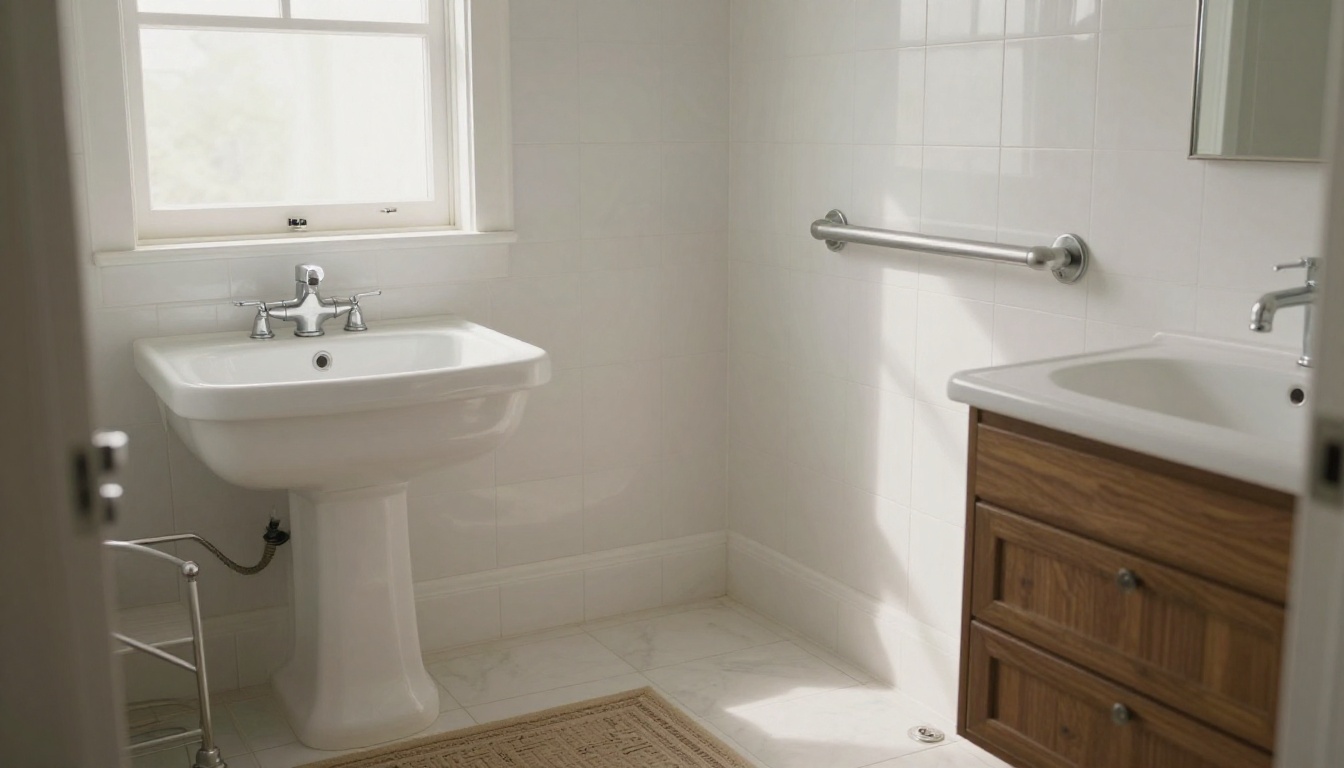
Start in the bathroom. It’s the highest-yield room for two reasons: wet surfaces, and the act of standing up from a seated position. Install grab bars next to the toilet and inside the shower or tub — anchored into studs or solid backing, not just drywall. Add a non-slip mat or textured strips. A handheld showerhead and a shower bench let you bathe seated, which removes the most common slip scenario.
Then the stairs. Handrails on both sides, not just one. Adequate lighting at the top and the bottom. Tread edges painted or marked so the lip is easier to see. If you have a single step between rooms — a sunken living room, a step down to a garage — that single transition causes a disproportionate share of falls, because the brain doesn’t register it.
Lighting is the cheapest big win. The National Institute on Aging recommends nightlights in halls and bathrooms, motion-activated bulbs in closets, and a lamp within arm’s reach of the bed. Replace throw rugs or tape them down firmly. Move cords out of walking paths. Shift regularly used kitchen items to waist height so you stop using step stools.
Vision and footwear belong on the same list. A yearly eye exam catches cataracts, which roughly double fall risk; sturdy, low-heel shoes — even indoors — beat slippers or socks on hardwood every time.
A question worth asking yourself: when did you last walk through your own house looking for trip hazards, rather than just living in it?
Will Medicare pay for any of this?
Mostly no, and this catches people off guard. Original Medicare classifies grab bars, raised toilet seats, shower chairs, and ramps as convenience items rather than durable medical equipment, even when a doctor prescribes them after a fall. AARP’s Medicare guide is direct about this: Part B will cover hospital beds, patient lifts, and trapeze bars with a prescription, but not the bathroom hardware most people actually need.
Medicare Advantage is a different story for some enrollees. Roughly 10–14% of Advantage plans now include a bathroom safety benefit or a flex-card allowance — sometimes up to $500 a year — that can be used toward grab bars or shower chairs, AARP reports. Coverage varies plan by plan, so check your evidence-of-coverage document under “supplemental benefits” or “SSBCI” (Special Supplemental Benefits for the Chronically Ill).
Outside Medicare, three other doors are open. State Medicaid waivers often pay for home modifications when the alternative is nursing-facility care. The VA’s HISA (Home Improvements and Structural Alterations) program offers eligible veterans grants of several thousand dollars for medically necessary modifications. And many Area Agencies on Aging run small home-repair grant programs — a phone call to your local agency is often the fastest way to find out what’s available where you live.
What to do this month
A practical sequence: walk the house with a notepad. Pretend you’ve broken a wrist and need to manage one-handed. Mark every spot where you’d reach for balance — those spots need bars or rails. Then book a medication review with your pharmacist (free at most chains), schedule the eye exam you’ve been putting off, and ask your primary care doctor for a STEADI fall-risk screen if you’ve fallen, felt unsteady, or fear falling. The CDC’s “Stay Independent” 12-question screen is the standard starting point.
If finances allow, a one-time visit from an occupational therapist (often covered by Medicare Part B when ordered by your doctor) is the highest-leverage spend on this list. They’ll catch hazards you’ve stopped seeing because you live with them every day.
This article is general information, not medical advice for any specific person. Talk to your own doctor before changing exercise or medication routines.
What to remember
Three things. Falls aren’t random — about one in four older Americans falls each year, and the home environment is the single biggest modifiable factor. Bathrooms, stairs, and lighting are where the evidence is strongest, and the fixes are not expensive. Original Medicare won’t pay for most of the hardware, but Medicare Advantage flex benefits, VA HISA grants, and state Medicaid waivers fill some of the gap, and a single occupational-therapy visit can change the entire plan.
Sources
- Centers for Disease Control and Prevention. “Facts About Falls.” 2026. https://www.cdc.gov/falls/data-research/facts-stats/index.html
- Centers for Disease Control and Prevention. “About Older Adult Fall Prevention.” 2025. https://www.cdc.gov/falls/about/index.html
- Centers for Disease Control and Prevention. “About STEADI.” 2025. https://www.cdc.gov/steadi/about/index.html
- National Institute on Aging. “Preventing Falls at Home: Room by Room.” 2025. https://www.nia.nih.gov/health/falls-and-falls-prevention/preventing-falls-home-room-room
- MedlinePlus, U.S. National Library of Medicine. “Falls.” 2025. https://medlineplus.gov/falls.html
- AARP. “Does Medicare Cover Home Safety Equipment?” 2025. https://www.aarp.org/medicare/faq/does-medicare-cover-home-safety-equipment/